
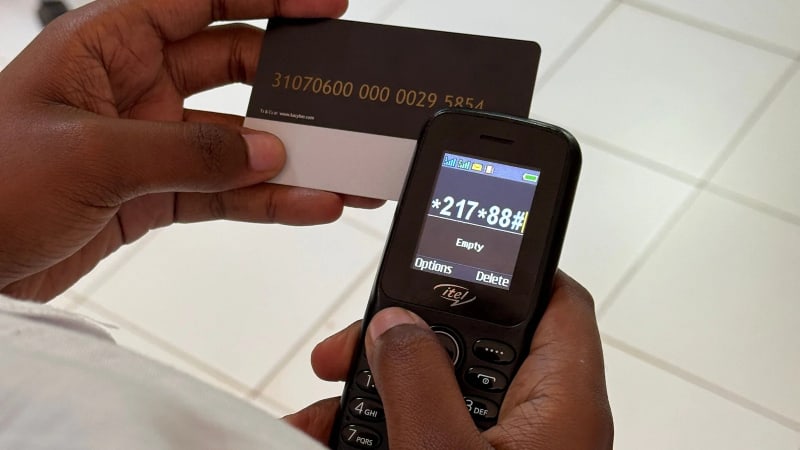
The buyer has selected 'paid' on a crypto marketplace.
A phone interacting with a payment card illustrates why marking an order paid is not final bank proof.
What pending payments changes in practice
The seller opens the bank account and sees nothing. This mismatch is not by itself proof of fraud, but it is a reason not to release the asset.
Where bank reconciliation fits in the process
The paid button usually records a participant's assertion, not an independent bank settlement event. Transfers may be pending, sent to the wrong recipient, blocked or falsely represented by a screenshot. The platform's escrow and dispute rules govern what happens next.
An ordinary decision about pending payments
The paid flag in a buyer's marketplace interface is a useful event marker, not a bank statement. If a seller cannot find the credit, compare the payer, beneficiary and transfer status before escalating. The same amount arriving from an unrelated person does not automatically settle the intended order.
A paid status is a claim until the recipient verifies it
The button that marks a P2P order paid usually records the buyer's action, not a direct statement from the receiving institution. If no matching credit appears, the seller must distinguish clearing delay, rejected payment, wrong beneficiary and possible fabrication. The order's own status can help organize a dispute, but it does not transform a screenshot into bank evidence. The right conclusion at that point is that the settlement question remains open. Neither participant benefits from pretending the ambiguity has disappeared simply because the timer is running.
Match the reported payment against amount, beneficiary and reference in the live order, then inspect the recipient account directly. If the seller has no corresponding credit, record that fact and use the dispute mechanism. A later incoming amount should be matched by identifiers before it is treated as the missing payment. This process leaves room for ordinary timing differences while protecting the seller from an irreversible crypto release based only on a buyer-generated state.
The identifiers worth comparing
Check the exact beneficiary, amount, bank reference and timing using your own account records. Ask for the official payment identifier inside the marketplace chat if the rules permit it. Keep the order open or escalate without sending replacement funds. The guide at https://shiftalcoin.com/ discusses what a paid status can and cannot establish. It does not verify a particular incoming bank credit.
- Verify the actual receiving-account credit in the recipient bank interface.
- Match the payer and order references before treating an amount as settled.
- Use the official dispute process when the bank and order displays disagree.
The failure mode behind pending payments
A rushed release in response to a chat message forfeits the platform's opportunity to evaluate the discrepancy. Calling a third-party phone number from a forwarded screenshot can lead the seller to an impersonator.
An outcome worth documenting
Do not treat the buyer's interface as a banking settlement statement. Act on the discrepancy through the official workflow and record each attempted confirmation. The difficulty of reconciling a payment close to order expiry is explored in why order deadlines differ from bank settlement.
#PendingPayments #BankReconciliation #Escrow