
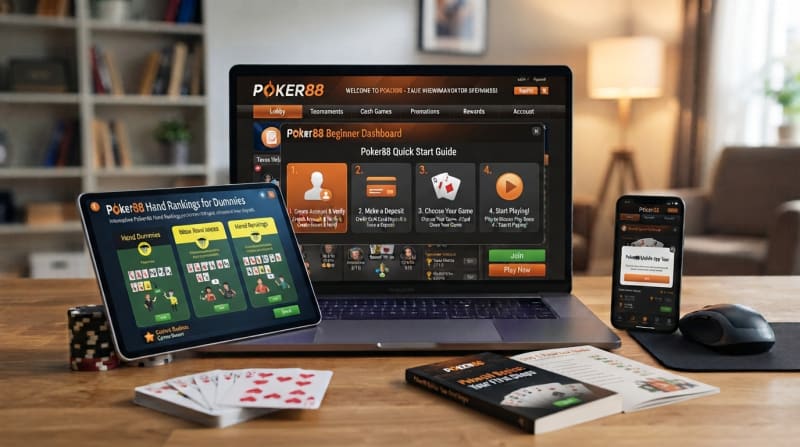
Online poker has become a familiar form of digital entertainment, combining traditional card-game rules with internet-based platforms. Before considering any poker website or app, it is important to understand how the game works, what risks may be involved, and why gambling should be approached carefully.
For someone researching poker88, the most useful starting point is to understand that online poker generally involves playing against other participants through a digital platform. Different websites can offer different game formats, rules, account requirements, and features. However, the basic principles of poker remain similar: players receive cards, assess the strength of their hands, and make decisions according to the rules of the particular variation.
Understanding the Basics
Poker is not simply about receiving good cards. Players typically need to understand hand rankings, betting structures, and the rules of the specific poker variation being played. Popular variations can include Texas Hold'em, Omaha, and other formats, each with its own rules.
A beginner should first learn the rules without using real money. Practicing with free games or studying examples can help someone understand concepts such as pairs, straights, flushes, and other poker hands. Learning the terminology is also useful because online poker interfaces often use specialized terms for actions and game stages.
How Online Poker Platforms Work
Online poker platforms usually provide a digital table where players can participate in games. Depending on the service and jurisdiction, users may encounter different game types, tournament formats, and account features.
Anyone researching an online poker service should independently check its ownership information, terms and conditions, privacy practices, age requirements, and applicable local laws. These details can vary considerably between services and countries.
It is also important to remember that gambling outcomes are uncertain. There is no reliable strategy that guarantees winning, and previous results do not determine future results. Claims suggesting otherwise should be treated cautiously.
Why Responsible Play Matters
Poker involving money carries financial risks. A person can lose money, sometimes quickly, and repeated gambling can create additional problems. For that reason, responsible gambling principles emphasize setting clear limits and never treating gambling as a method of earning income.
Young people should not participate in real-money gambling. Age restrictions exist because gambling can carry significant financial and psychological risks, and the rules differ depending on the location.
Questions Beginners May Have
Is poker purely a game of skill?
Poker involves decision-making and strategy, but chance remains an important part of the game. A strong player cannot control which cards are dealt.
Can poker provide a dependable source of income?
No. Gambling outcomes are uncertain, and losses are possible. It should not be regarded as a dependable way to make money.
What should beginners learn first?
Start with the rules, hand rankings, terminology, and probability concepts. Practice without real money before making any decisions involving gambling.
Final Thoughts
Getting familiar with poker starts with understanding the game rather than immediately joining a real-money table. Learning the rules, recognizing the role of chance, and understanding the risks can provide a more realistic picture of online poker.
For anyone researching a particular poker platform, checking independent information and local regulations is important. Most importantly, gambling should never be viewed as a guaranteed way to make money, and minors should avoid real-money gambling altogether.